Business
How to Price Your Products Without Losing Money
A simple pricing method: add up your costs, set your margin and check what your area charges, with easy examples you can repeat for every product.
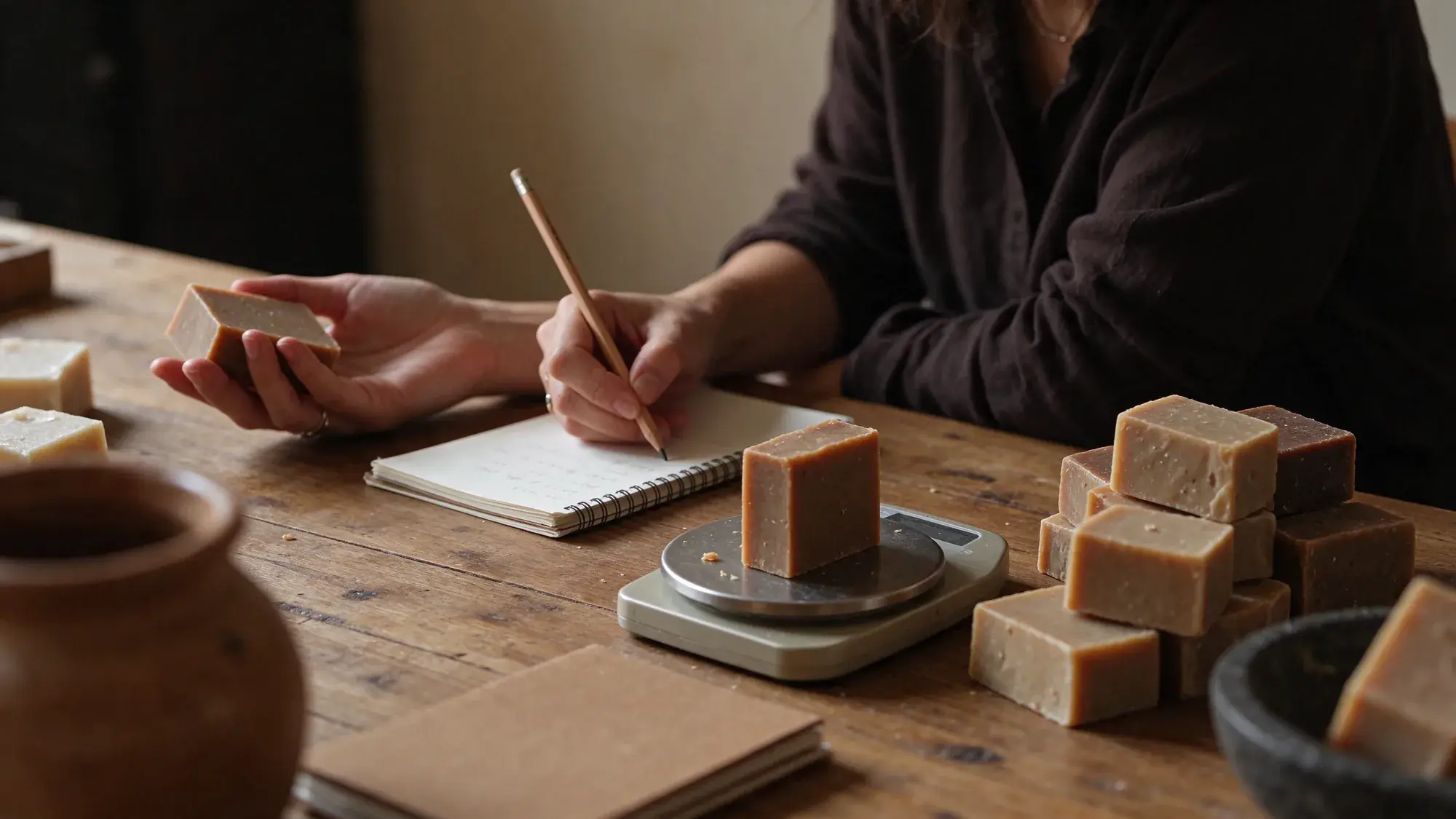
When I started selling soap, I priced it by looking at what a woman at the market charged and knocking a bit off to be "cheaper." Sales went well and everything else went badly. By the third month I realized that after paying for oils, molds, little boxes and transport, I was practically working without pay.
Pricing isn't guessing or copying. It is a simple calculation with three parts, and once you do it for one product the rest follows.
The three numbers you need
To set any price you need to know what it costs you to make or buy the product, how much you want to earn on top of that and how much people in your area are willing to pay. The first two come from your own numbers. The third comes from looking around.
If any of the three is missing, the price limps. Without cost, you can sell a lot and lose money. Without margin, you work to pay for materials. And without looking at your area, you can end up so expensive nobody buys or so cheap people get suspicious.
Many people start with the third, looking at others, and never get to the other two. It is understandable: checking what your neighbor charges is easy, adding up costs feels like a chore. But a copied price carries someone else's costs, not yours. If they buy cheaper or work faster, their price can sink you.
How to work out the real cost
Real cost is more than what you paid for raw materials. It includes everything the product needs to reach the customer: ingredients or stock, packaging, the label, the bag, the part of shipping you cover and, if you take cards, the payment fee.

An example with made-up numbers: a soap uses 1.20 in oils and scents, 0.30 for the box and 0.10 for the label. Its direct cost is 1.60. If you also pay 10 in transport to take 50 soaps to a fair, add 0.20 to each one. Real cost: 1.80.
Your hours are worth something too. If you don't count them in the cost, at least make sure the margin covers them. I go into more detail in how to calculate profit per product.
Do this exercise once, calmly, for all your main products, and keep it. You don't need to repeat it every week. You only come back to it when something changes: an input goes up, you switch suppliers, you start shipping farther.
In Selki each product has a cost field only you can see; customers never see it in the Store. You fill it in when you create the product, next to the price, and the app later uses it to show you the cost of goods sold each month in Cash. So the numbers are at hand every time you review a price, without digging out the notebook. The rest of what Selki does is on its site.
Margin and markup, with an example
This is where almost everyone gets confused, so let's go slowly. Markup is what you add on top of cost. Margin is the share of the final price that is profit. They are not the same.
If your soap costs 1.80 and you add a 100% markup, you sell it for 3.60. Your profit is 1.80, half the price: a 50% margin. If instead you add a 50% markup, you sell it for 2.70 and your margin is about a third, roughly 33%.
"I make 50% on it" doesn't mean the same thing to everyone. Do the math on the final price, not on the cost.
A practical way to think about it: decide what margin you want and divide the cost by what is left. If you want a 40% margin, divide 1.80 by 0.60 and you get 3.00. That is your minimum price for that margin.
Check what your area charges
With your price worked out, go and look. Walk the market, browse other online shops in your city, ask people you know what they would pay. Not to copy, but to know where you stand.

If your price comes out much higher, ask yourself what extra you offer: better materials, home delivery, gift-ready packaging. If you have any of that, show it in the photo and the description. If you don't, review your costs; sometimes simpler packaging or buying in bulk changes the math.
If it comes out much lower, don't celebrate yet. You may be leaving money on the table. A price that is too low also makes people doubt the quality.
And don't compare on price alone. Two similar products can be worth different amounts depending on how they are delivered, how long they last or how well the seller looks after you. If your customers value quick replies and on-time delivery, that is part of what they pay for.
Offers, wholesale and when to raise prices
Offers are useful when they have a purpose and an end: shifting a product that stalled, attracting new people on a special date. Always with an end date and calculated against your cost, never below it. In Selki you open the product, tap Discount, choose a percentage or an amount and a date under Ends; when that day comes, the price goes back on its own. This is how it looks at Linen & Loam, an example clothing store made with Selki: the old price struck through, the percentage and the day the sale ends. If you want something more elaborate, use discount coupons.
If you sell wholesale, the reseller's price has to be lower than your end customer's, but always above your cost and with a minimum order that justifies it. In Selki each product can have a retail and a wholesale price; I cover it all in wholesale and retail pricing.
And when should you raise prices? When your costs go up, when demand outstrips what you can produce or when you have improved the product. Review your prices at least twice a year, tell your regular customers a few days ahead and explain the reason in one sentence. Most people understand, and those who leave over a reasonable adjustment were rarely the customers keeping you afloat.
Frequently asked questions
What is the right margin?
There is no single number. It depends on your product, how much you sell and your fixed costs. What matters is that the price covers every cost and leaves something that makes your work worthwhile.
Should I charge the same as competitors?
Not necessarily. Use them as a reference so you are not out of line, but your price comes from your costs and what you offer.
How do I raise prices without losing customers?
Give notice, explain the reason in one sentence and keep the quality up. Most customers understand a reasonable adjustment.
Does Selki help with pricing?
Selki lets you save each product's cost, which customers never see, alongside the retail and wholesale price, and create discounts with an end date.