Cash
How to Track Cash Flow in a Small Business
Learn to record income and expenses, separate your money from the business money and see what is left each month with a method you can stick to.

For a long time my way of knowing how the business was doing was to open the drawer and look. Money inside meant good. No money meant bad. It was exactly as bad a system as it sounds: some months the drawer looked full because I hadn't paid the supplier yet, and others it looked empty even though I had sold better than ever.
Tracking cash flow simply means writing down what comes in and what goes out. You don't need to know accounting or have complicated software. You need consistency, one place to write things down and to separate two kinds of money that almost everyone mixes when they start.
What cash flow is and why you should track it
Cash flow is the record of all the money passing through your business. Money comes in when you sell, when someone pays a debt or when you put your own money in to get started. It goes out when you buy stock, pay rent, electricity, transport or pay yourself.
Writing it down does three very concrete things. It tells you whether the month was really good. It shows you in time when an expense is eating your profit. And it lets you decide with numbers instead of hunches: whether to raise a price, hire help or buy more stock.
Think of Marta, who sells empanadas outside a school. For months she felt she worked like crazy and the money never stretched. When she started writing things down, she found almost a third of what came in went on sodas she bought at retail from the shop next door, because she never had time to go to the wholesaler. She wasn't selling badly. She was buying badly. And you only see that with the numbers in front of you.
On top of that, once your cash flow is up to date, the uneasy feeling of not knowing where the money went disappears.
Separate your money from the business money
This is the hardest step and the one that changes everything. If you pay for household groceries with the day's sales and then buy stock with money from somewhere else, you will never know whether the business makes money or costs you money.

The simplest fix is a separate account or, at least, a physical place just for the business. A box, an envelope, a separate wallet. Everything you sell goes in there; everything the business needs is paid from there.
And pay yourself a salary, even a small one. A fixed amount each week or month that moves from the business to you. That way the household knows what it can count on and the business stops being a cash machine. If you need to take more one month, write it down as a withdrawal. The point isn't to never take money out, it is to know how much you took.
It feels strange at first to pay yourself when the business is still small. Do it anyway, even if the amount is symbolic. It forces you to treat the business as something that has to support itself, and it gives you a clear benchmark: if one month it can't even cover that salary, something needs to change.
What to write down every day
Each entry has the same parts: the date, whether it is income or an expense, how much, what for and how it was paid (cash, transfer, card). That is enough.
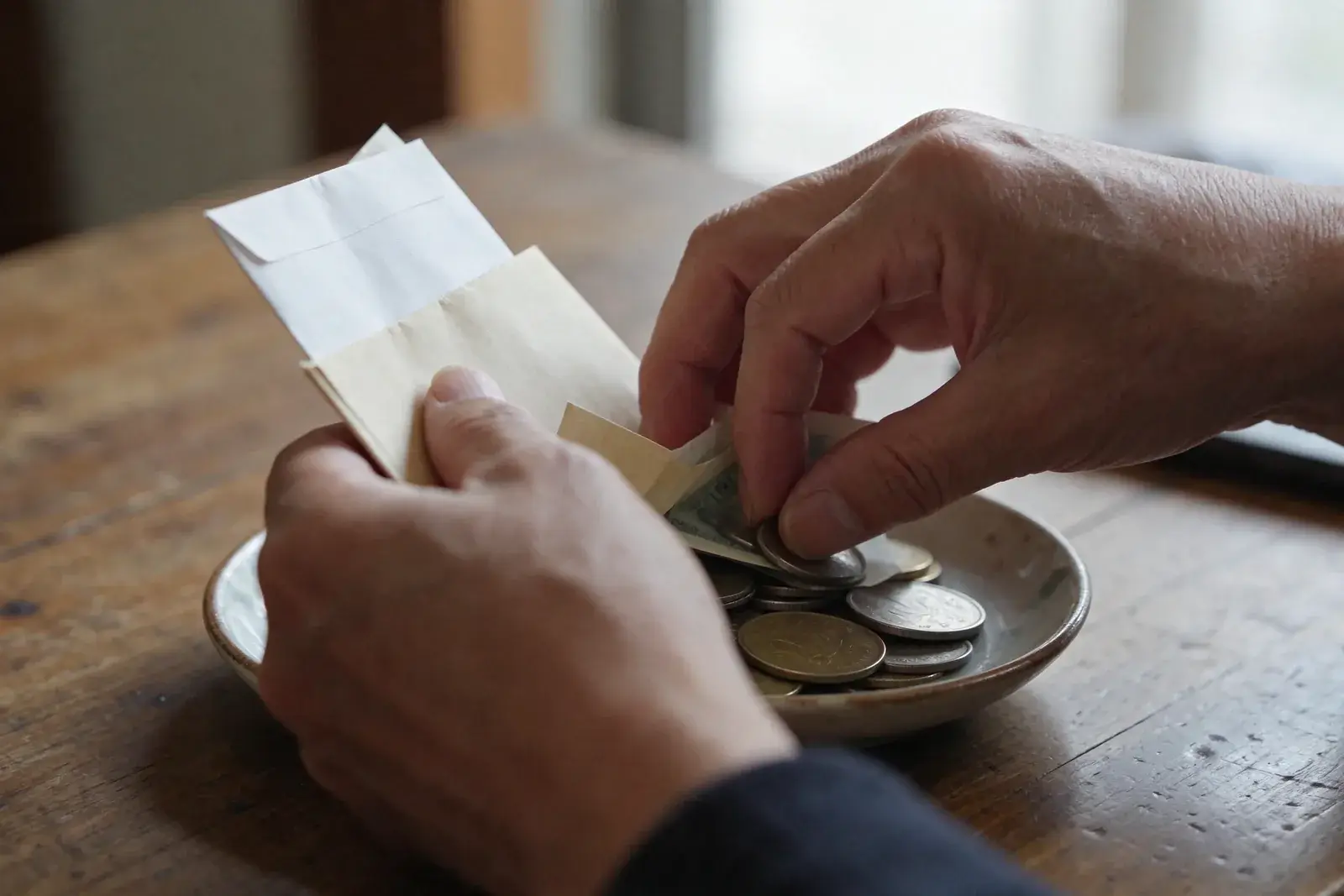
Write it down at the time. I say this from experience: leave it for the evening and you forget the small expenses, the taxi, the bag of ice, the photocopies. And those are exactly the ones that add up by month's end to a figure you can't explain.
When you close the day, compare your record with what is actually in cash and in the account. If it matches, great. If not, look for the difference that same day, while you still remember what happened.
In Selki's Cash section every sale you record already counts as income. For an expense you tap Add an expense, type the amount, pick the category (Supplies, Transport, Rent, Utilities) and save; on your phone it takes less than a minute. If you sold on credit, the sale stays linked to the customer under Accounts and doesn't get confused with money that hasn't arrived; I explain it in how to handle selling on credit.
You don't need to know accounting. You need to write everything down, always, in the same place.
What is left each month and how to close it
The math is simple: everything that came in minus everything that went out. What remains is what the month really left you. For example, if you sold 2,000, paid 1,100 for stock, 400 for rent and utilities and paid yourself 300, you have 200 left to save or invest in the business.
Closing the month doesn't have to eat an afternoon. With your records up to date it takes fifteen minutes. Add up income and expenses, check which costs were higher than usual, see how much people owe you and how much you owe, and compare with the previous month.
Selki shows you in Cash what is left this month as the month goes along. When it ends, you tap Close month: the app shows you what is worth a look, like overdue debts or sales without cost, and saves the result so you can compare months in Reports. You can see what Cash and the rest of the app do at selki.app. If you want to know how much each product earns you, that is a different calculation, covered in how to calculate profit per product.
Mistakes that throw your books off
The first, as we said, is mixing money. The second is recording only sales and forgetting small expenses. The third is ignoring fixed costs that aren't paid every month, like an annual permit or machine maintenance; spread them month by month so they don't catch you off guard. There is more on that in fixed costs of a small business.
Another common one is counting money that hasn't arrived yet. A sale on credit or a transfer that hasn't landed isn't cash yet. Keep it separate until it is paid.
And the last, the most human: stopping your records when the month is going badly. That is exactly when you need the numbers most. Up-to-date books won't make you sell more, but they show you clearly where the money is leaking, and that is half the battle.
Frequently asked questions
What is the difference between cash flow and profit?
Cash flow is the money coming in and going out. Profit is what is left after subtracting all costs. You can have plenty of money moving and still be earning little, which is why it pays to watch both.
How often should I balance the books?
Ideally at the end of each day, even quickly, plus a fuller close at the end of the month.
Should I pay myself a salary?
Yes, even a small one. That way you know how much goes home and how much stays in the business, and you stop pulling money out without keeping track.
Can I track cash flow in Selki?
Yes. In Selki's Cash section you record income and expenses, see what is left this month, get reports and close each month.