Cash
Selling on Credit: How to Offer Store Credit Safely
Simple rules for selling on credit: who to trust, how much, how to track each tab and how to collect without fights, so credit never sinks your business.

In my aunt's shop there was a blue notebook under the till. That was where the neighborhood's credit lived: names, sums, crossings-out, partial payments in different colored ink. It worked, more or less, until one day a soda bottle tipped over it and half the debts vanished. She still remembers how much the man from the corner owed her. The man, curiously, does not.
Selling on credit is a custom that survives because it makes sense: a trusted customer buys even without cash today, and you don't lose the sale. The problem is never giving credit. It is giving credit without rules, from memory and without a record that holds up.
What selling on credit is and when it makes sense
Selling on credit means handing over a product today and getting paid later. Until they pay, your money is in the customer's pocket, not in your till. So the question isn't "should I give credit or not?" but "can my business afford to wait for this payment?"
It usually makes sense when the customer is known and buys often, when the amount is small compared with what you sell in a week and when your margin is wide. If you earn little per product, a single unpaid debt wipes out many sales. With example numbers: if you buy at 10 and sell at 12, you earn 2 per unit; to make up a lost debt of 120 you would have to sell 60 more units just to break even.
There is another question worth asking: does giving this person credit bring me anything beyond this sale? Sometimes it does. The customer who buys on credit at the end of the month and pays on payday is often the most loyal of all. That credit, handled well, is a way of looking after a good customer. Other times it is just a sale collected late and with effort.
Who to give credit to and how much
Set the rules before anyone asks, not on the spot with the customer in front of you and a queue waiting. Five short rules cover almost everything:
- Only customers with a history, who have bought several times and paid.
- A cap per person that you could lose without the business wobbling.
- A specific payment date, not "whenever you can."
- Only one open tab at a time per customer.
- For anyone who has let you down before, only with a payment up front.

Write them down, even on a sheet stuck behind the counter. When rules exist, saying no is much easier: it isn't you refusing, it is the rule. Asking for a small payment at the start helps a lot too; someone who leaves something today usually comes back to pay the rest.
How to record every debt
A debt nobody wrote down is a debt people argue about. Every time you give credit, note who it is, with full name and phone number, what they took, exactly how much they owe, when they promised to pay and every partial payment with its date. That way the balance always adds up and nobody has to remember anything.
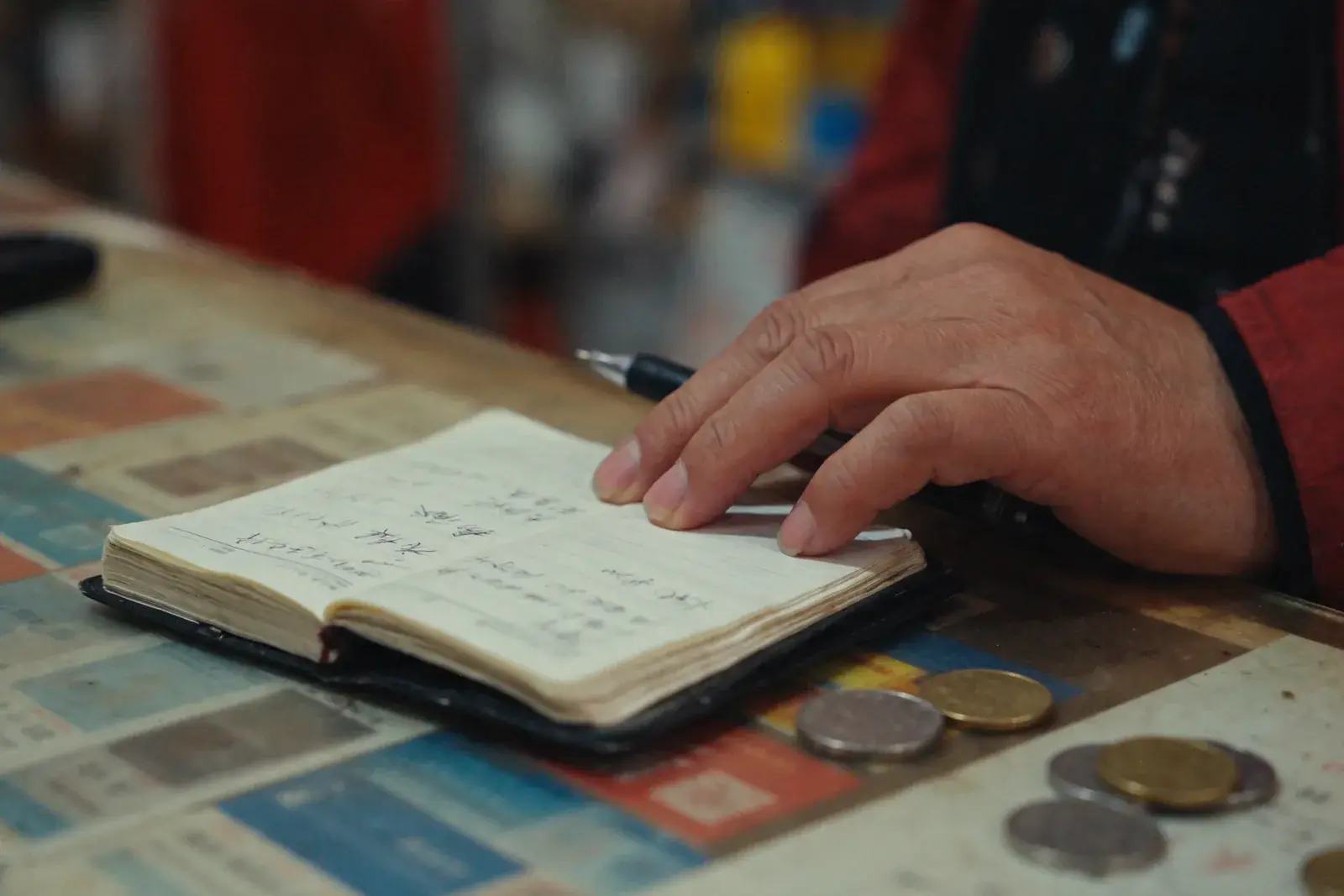
If you use paper, one page per customer, never a notebook with everything jumbled. And keep it away from bottles.
Keep the accounts ready to show the customer when they ask. If someone asks how much they owe, being able to tell them the exact amount with the date and each purchase removes any doubt. Arguments about credit almost always come from numbers nobody can check.
In Selki you record the sale on credit: in Sell you add the products, choose the customer, set the date they will pay and tap Save credit sale. The sale stays linked to that customer, and in Cash, under Accounts, you see who owes you and whom you owe, so credit doesn't get mixed up with money that has actually come in. To organize the rest of your books, how to track cash flow has the full method.
How to collect without making it awkward
Nobody minds being asked to pay as much as being asked out of the blue or rudely. If the customer knew the date and amount from the start, collecting is just a reminder.
Collecting isn't fighting. It is kindly reminding someone of something you both agreed.
Write the day before it is due: "Hi Carla, just a reminder that your tab of 35 is due tomorrow. Let me know if anything comes up." State the amount and date clearly, offer easy ways to pay, like a transfer as well as cash, and accept partial payments; a partial payment keeps the debt and the relationship alive. And always in private, never in front of other customers or in groups.
Selki helps with reminders, so you don't have to remember who is due when. When an account comes due, you open it and the app drafts the message with the balance and the purchase date; you read it, change it if you like and send it on WhatsApp, calmly. The rest of what Cash does is at selki.app.
What to do when someone doesn't pay
First, rule out forgetfulness. A second message or a call solves more cases than you would imagine. If there is a real problem, like losing work or a family emergency, offer small instalments on fixed dates. Getting a little, regularly, is better than nothing.
If weeks go by without an answer, stop giving that person credit until they catch up, and don't refuse them cash sales; they often come back to pay when they see you still treat them well. And if in the end they don't pay, record it as a loss and learn from it: was the cap too high? Did they have no history?
One last thing: once a month, check how much you are owed in total. If that sum climbs month after month, credit is financing your customers with your business's money, and it is time to tighten the rules before you can't cover your fixed costs.
Frequently asked questions
Is selling on credit a good idea for a small business?
It depends on how much your cash can take. If giving credit leaves you without money to restock, it isn't. If you limit it to known customers and small amounts, it can bring repeat purchases.
How much credit can I give a customer?
An amount you could lose without your business wobbling. Think of a figure that, if it never came back, wouldn't stop you paying the month's bills.
How do I collect without making it awkward?
With a short, friendly message giving the amount and the agreed date, the day before it is due. In private, never in front of other customers.
Can I track credit in Selki?
Yes. You record the sale on credit linked to the customer, and in Cash you see who owes you and whom you owe, with reminders.