Business
Inventory Management for a Small Store: A Simple Guide
How to manage inventory in a small store without the headache: what to record, how often to count and how to avoid stockouts and overstock.

There was a time when I thought I knew everything in the shop by heart. Then one Saturday a customer asked for six bags of a coffee I swore I had, I went to the back and found two. I lost the sale and looked bad doing it. That same week I found an entire box of something I thought had run out months earlier.
Inventory isn't paperwork for big companies. It is knowing what you have, how much and where, so you don't promise what isn't there or buy what you already have too much of. In a small store every product sitting still is money sitting still, and every stockout is a sale that walks over to the shop next door.
Why keeping inventory is worth it
The first reason is money. Everything on your shelves has been paid for, and until it sells it does nothing for you. Knowing what moves and what doesn't lets you buy better: more of what flies, less of what gathers dust.
The second is trust. If you sell on WhatsApp or have an online store, saying "yes, we have it" and then "sorry, my mistake" wears anyone down. With stock up to date you answer with confidence.
It works the same way with suppliers. If you know how much of each item you sell per week, you order precisely, you negotiate better and you don't end up with extra stock you later have to clear out. Inventory gives you arguments, not just numbers.
The third reason is that without inventory you can't tell when things go missing. I don't just mean theft; I mean expired, broken or given-away products nobody wrote down. All of that is loss, and you only see it when you count.
What to record for each product
You don't need twenty columns. These cover almost everything: a clear name, the variant if there is one (size, color, flavor), how many units you have, what each one cost you, what you sell it for and a minimum below which you need to restock.
Cost matters even though nobody else sees it, because it is what lets you work out your profit per product. So does the variant: ten T-shirts tell you nothing if you don't know that seven are size S and nobody asks for them.
If you have lots of products, group them by category from the start. It makes counting and finding things easier, and it is the same logic I explain in how to organize categories and variants.
The first count, without the drama
The first count is the heaviest and you only do it once. Pick a quiet day, ideally with the shop closed or during a slow hour, and go in sections:
- Start with one shelf or category and don't jump to another until it is done.
- Count what you see and write it down on the spot, no "I'll copy it later."
- Check the storeroom and anything set aside for orders.
- Separate damaged or expired items and note them on their own.
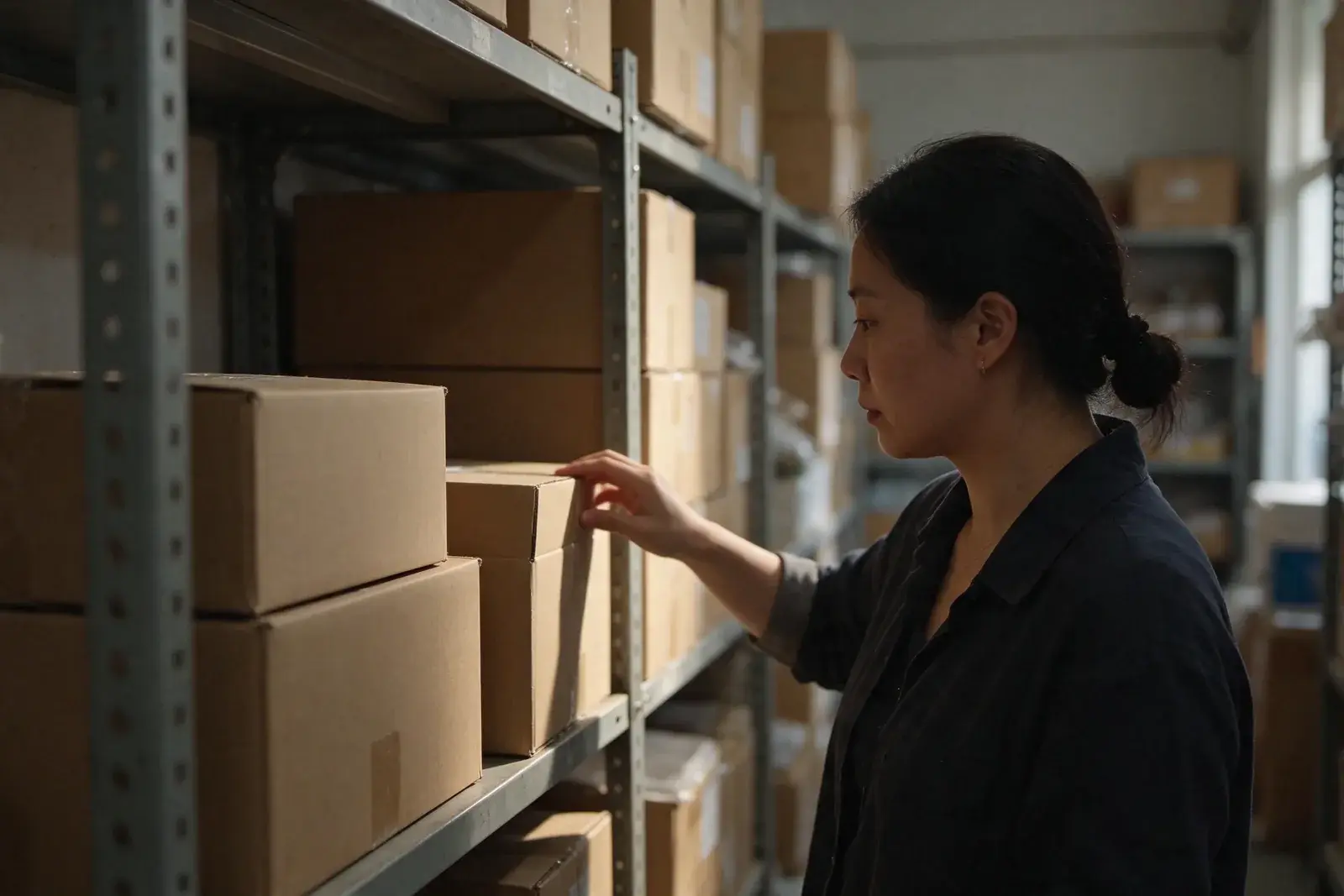
If someone helps you, one counts and the other writes. It goes much faster with fewer mistakes. Don't worry if it takes a whole afternoon; from then on you only have to keep it current.
When you finish, compare what you counted with what you thought you had. There are almost always surprises: products you thought were gone, others that have vanished. Don't beat yourself up about it; that is exactly why you are counting. From here you start with real numbers.
Deducting, restocking and knowing when to reorder
Here is the real secret: every sale has to subtract and every purchase has to add. Always, no exceptions. Skip it one day "for later" and by day three nothing matches.

With a notebook that is hard, because it depends on remembering in the middle of a busy day. That is why many of us end up moving to an app. In Selki each product, and each variant, has its own stock; when you record a sale in Sell or tap Charge on a WhatsApp order, the quantity goes down by itself. When new stock arrives, you tap Restock in the inventory and type the new number; if something breaks, you make an adjustment and the reason is saved. At Linen & Loam, an example clothing store made with Selki, every piece carries its stock by size: pick a size and the page tells you how many are left, and whatever ran out shows as sold out.
Your minimum stock is your alarm. Think about how many days your supplier takes to deliver and how much you sell in that time. If you sell about 5 units a week and an order takes a week to arrive, your minimum should sit above 5, say 8, to give yourself room. In Selki you set it once in Low stock alert, type that number under Alert me when there are, and the app warns you before the product runs out, not after. It is one of those small things Selki does that a notebook leaves to your memory.
A stockout isn't just a lost sale. It is a customer learning to buy from someone else.
The mistakes that keep coming back
The first is counting once and never again. Even if you record everything, do a full count every month or every three months, plus a quick weekly count of your fastest movers. There are always surprises.
The second is not recording what leaves without being sold: the sample you gave a customer, the product that got knocked over, the thing you took home. It seems like nothing, but it adds up by the end of the month.
The third is mixing inventory with money. Knowing how many units you have is one thing; knowing how much money came in and went out is another, and that lives in your business cash flow. The two go together, but mix them in the same notebook and you end up understanding neither.
Start simple. One good count and the habit of deducting every sale already put you ahead of most.
Frequently asked questions
How often should I count my inventory?
A full count every month or every three months, depending on how much you sell, plus quick weekly counts of your fastest movers.
What if the count doesn't match my records?
Set the number to what is really there and note the reason, even if it is a guess. If the gap keeps showing up in the same products, something there needs looking into.
Do I need expensive software?
No. A tidy spreadsheet is enough to start. What matters is that every sale subtracts and every purchase adds, without exceptions.
Does Selki handle inventory?
Yes. Each product and each variant has its own stock, sales deduct automatically, you can make adjustments and it warns you when something is about to run out.